That's a budget allocation problem masquerading as a reporting problem. According to Improvado's 2026 B2B Marketing Attribution Guide, last-touch attribution still dominates at 67% adoption, yet companies switching to multi-touch models report discovering that up to 60% of their spend was previously misallocated.
This post covers what multi-channel attribution is, how the main models differ, and the practical steps for implementing it effectively.
Key Takeaways
- Multi-channel attribution distributes conversion credit across all touchpoints in a customer's journey—not just the first or last interaction
- Attribution models range from simple rules-based approaches (first-touch, last-touch, linear) to machine learning-driven algorithmic models
- Key challenges include cross-device tracking gaps, platform over-reporting, and signal loss from iOS privacy changes
- Best practices start with defining your business goal first, then selecting the attribution model that fits it
What Is Multi-Channel Attribution?
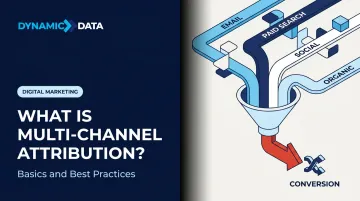
Multi-channel attribution is the process of assigning credit to every marketing touchpoint that contributed to a conversion—ads, email, organic search, social media, direct visits—rather than crediting a single interaction.
A touchpoint is any meaningful interaction between a potential customer and your brand. Consider this path:
- A prospect sees a sponsored Instagram post
- They Google your brand name and read a blog article
- They receive a nurture email three days later
- They click a retargeting ad and request a demo
Which channel deserves the sale? Last-touch credits retargeting; first-touch credits Instagram. Multi-channel attribution says all four played a role and assigns credit accordingly.
Why Single-Touch Models Fall Short
Single-touch models distort the picture rather than simplify it. Last-touch attribution creates a self-reinforcing cycle: channels that capture bottom-funnel demand appear highly effective, while the awareness campaigns that generated that demand look like waste. Teams end up over-investing in conversion tactics and starving the campaigns that build pipeline to begin with.
The scale of this problem compounds in B2B. HockeyStack's 2024 analysis of 150 B2B SaaS companies found an average of 266 touchpoints required to close a deal—up 19.8% from the prior year. For deals over $100K ACV, that number climbs to 417 touchpoints. Applying a single-touch model to a journey that long produces actively misleading conclusions about channel performance.
Key conversion events multi-channel attribution can track include:
- Purchases and subscription sign-ups
- Free trial activations and demo requests
- High-intent form fills and gated content downloads
- Any other event that represents a meaningful business outcome
Types of Multi-Channel Attribution Models
Attribution models fall into two broad categories: rules-based (credit assigned by manually defined weights) and algorithmic (machine-learning-driven, based on actual conversion patterns). No single model works best for every situation. The right choice depends on your sales cycle, data quality, and what business question you're trying to answer.
Rules-Based Models
| Model | How Credit Is Assigned | Best For |
|---|---|---|
| First-Touch | 100% to the first interaction | Measuring top-of-funnel awareness |
| Last-Touch | 100% to the final interaction | Simple tracking; built into most ad platforms |
| Linear | Equal credit across all touchpoints | Holistic view of the full journey |
| Time-Decay | More credit to touchpoints closer to conversion | Short sales cycles, promotional campaigns |
| U-Shaped (Position-Based) | ~40% to first, ~40% to last, 20% split across middle | Businesses focused on both acquisition and closing |
| W-Shaped | Heavy weighting on first touch, lead creation, and opportunity creation | B2B with distinct funnel milestones |
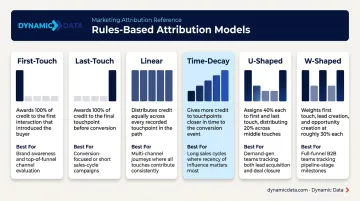
Linear is genuinely useful for getting a full-funnel view, but it treats a brief banner impression the same as a high-intent product page visit. Time-decay corrects for recency but can undervalue early-stage campaigns that built initial awareness. U-shaped works well when you care about both what brought someone in and what closed them.
Each rules-based model makes a trade-off. When those trade-offs become costly — particularly for teams running complex, multi-touch campaigns — algorithmic models offer a more evidence-based alternative.
Algorithmic Attribution
Data-driven attribution — now the default in Google Analytics 4 — uses machine learning to analyze actual conversion paths and assign credit based on which touchpoints statistically influenced outcomes. It outperforms rules-based models when you have enough conversion data to train on, but it doesn't function well below a minimum volume threshold. GA4's documentation specifies this threshold; teams below it will get unreliable results regardless of how the model is configured.
According to Marketing LTB's 2026 attribution research, only 7% of marketers currently use data-driven algorithmic attribution, while first-click and last-click together still account for 47% of all usage. That adoption gap points to real operational barriers: data volume requirements, tooling complexity, and the organizational lift of switching from familiar defaults.
Multi-Channel Attribution vs. Multi-Touch Attribution vs. Marketing Mix Modeling
These three terms get used interchangeably, but they mean different things and serve different purposes.
Multi-channel attribution (MCA) is the overarching framework—the goal of understanding which channels drive revenue across the business.
Multi-touch attribution (MTA) is the methodology that operates within that framework at the user level, tracking individual interactions across digital channels to distribute credit granularly.
Marketing Mix Modeling (MMM) takes a completely different approach: it uses aggregate historical spend and sales data to estimate channel impact statistically—including offline channels like TV, print, and events. MMM doesn't depend on individual user tracking, which makes it far more resilient to privacy restrictions.
When to Use Each
| Method | Best Use Case | Key Constraint |
|---|---|---|
| MTA | Daily digital campaign optimization; sales cycles under 7 days | Requires strong identity resolution; privacy-sensitive |
| MMM | Strategic budget planning across online and offline; sales cycles over 30 days | Needs 100+ weeks of historical data; not real-time |
| MCA | Overall framework connecting both methods | Not a tool—a measurement philosophy |
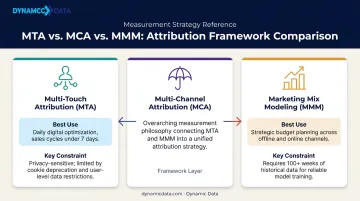
MMM adoption has surged from 9% in 2023 to 26% in 2026 (according to industry measurement surveys), largely driven by signal loss from iOS privacy changes. Most mature measurement teams now run both MTA and MMM in parallel. MMM sets quarterly budget envelopes; MTA handles day-to-day optimization.
Google's open-source Meridian and Meta's Robyn show how seriously major platforms are backing MMM as an alternative that holds up under privacy constraints.
Common Challenges in Multi-Channel Attribution
Cross-Device Fragmentation
An estimated 90% of consumers switch between multiple devices to complete a single purchase. Without a unified customer identity layer connecting those sessions, attribution systems see three different "users" instead of one. The result: incomplete journeys, duplicated credit, and fundamentally flawed reporting.
Platform Over-Reporting
Every major ad platform defaults to a measurement model that favors its own channels. Meta and Google report 20-30% more conversions than third-party attribution tools, partly because they use different attribution windows—Meta defaults to 7-day click / 1-day view, while Google uses a 30-day click window. When you pull platform-native reports and add the numbers together, you're almost certainly double-counting.
An independent attribution layer—separate from any single platform—is the only reliable way to get an accurate cross-channel view.
Privacy Restrictions and Signal Loss
Signal loss has become the most structurally disruptive force in attribution measurement. Three converging trends are eroding the data foundation most teams built their models on:
- ATT opt-out rates: The industry-average iOS tracking opt-in sits at just 35% as of Q2 2025, leaving 65% of iOS user journeys invisible to pixel-based tracking
- Ad blocker adoption: Over 40% of internet users globally now block tracking scripts entirely
- Cookie deprecation: Third-party cookies continue to be phased out across major browsers, closing another longstanding data source
Together, these factors mean 40–60% of digital tracking data is now lost. Attribution isn't broken—but teams that haven't invested in first-party data infrastructure are working with an increasingly incomplete picture.
Best Practices for Multi-Channel Attribution
1. Define Your Goal Before Choosing a Model
Start with the business question. Are you trying to reduce customer acquisition cost? Justify spend on upper-funnel channels? Understand what drives repeat purchases? The model should serve the goal, not the other way around. A time-decay model makes sense for a short promotional campaign; a U-shaped model fits better for a B2B SaaS team with a 60-day sales cycle.
2. Unify Your Data First
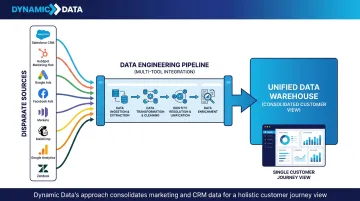
Attribution is only as good as the data feeding it. That means pulling touchpoint data from every channel (CRM, ad platforms, email, web analytics) into a single location before applying any model.
This is where most attribution projects stall. Fragmented data produces fragmented attribution. Building a proper data pipeline that consolidates these sources isn't the exciting part, but it's the foundation everything else depends on.
Dynamic Data's data engineering practice is built around exactly this problem: designing and maintaining end-to-end pipelines that consolidate marketing touchpoint data from disparate sources into a unified warehouse. In their work with Pima Solar, the team connected three separate tools (CallFire, Go High Level, and JobNimbus) to create a single view of the customer journey from first call to closed sale, giving the client visibility into marketing source effectiveness they couldn't access before.
3. Tag Everything Consistently
UTM parameters are tedious to maintain and essential to get right. Every campaign URL needs proper tagging with utm_source, utm_medium, and utm_campaign at minimum. Inconsistent casing, missing parameters, or ad-hoc naming conventions produce "(not set)" values that quietly corrupt channel-level attribution data.
Use a consistent naming convention across the team, document it, and enforce it. That discipline compounds over time: clean tagging is what separates reliable attribution from data you can't trust.
4. Test Models Side by Side
Before committing to a single model, run two or three simultaneously on the same conversion data. The differences in credit distribution across models reveal the assumptions baked into each one, and help you identify which model most closely reflects how your customers actually buy.
5. Revisit Quarterly
Attribution isn't a setup task; it's an ongoing process. Channel mix changes, new campaigns launch, customer behavior shifts. A model calibrated for one phase of your business can produce misleading conclusions six months later. Build in a quarterly review to assess whether your current model still reflects reality — and adjust before bad data drives bad decisions.
Frequently Asked Questions
What is the multichannel attribution model?
A multichannel attribution model is a framework for distributing conversion credit across all the marketing channels a customer interacted with before converting, rather than assigning all credit to a single touchpoint. Most purchases involve multiple exposures across different channels — this model accounts for all of them.
What are attribution models in marketing?
Attribution models are rules or algorithms that determine how credit for a conversion is assigned to different marketing touchpoints. They range from simple single-touch models (first-click, last-click) to sophisticated data-driven models that use machine learning to weight touchpoints based on actual conversion patterns.
How do you choose the right attribution model?
Match the model to your sales cycle and objective. Time-decay works well for short cycles or promotions. Linear or U-shaped models suit longer consideration journeys. Algorithmic models are best when you have sufficient conversion volume and need granular optimization data. If you're unsure, run multiple models side by side and compare.
What's the difference between MTA and MMM?
MTA (multi-touch attribution) tracks individual user-level interactions across digital channels to assign conversion credit. MMM (Marketing Mix Modeling) uses aggregate historical data to estimate channel impact—including offline spend—without depending on user-level tracking. MTA supports daily optimization while MMM informs quarterly budget planning.
What is multi-channel analytics?
Multi-channel analytics is the practice of collecting and analyzing customer data across all marketing and sales channels to understand behavior patterns, channel performance, and how combinations of touchpoints influence business outcomes. It's the measurement foundation that attribution modeling is built on.
How can analytics transform traditional reporting?
Modern analytics platforms replace static, disconnected reports with cross-channel dashboards that reveal the full customer journey in real time. Instead of pulling separate reports from each ad platform and reconciling them manually, teams get a single view, enabling faster decisions and more accurate measurement of what's actually driving revenue.